

If you want to start a word puzzle game as a beginner, the sheer number of options and unfamiliar rules can make the whole thing feel more intimidating than fun. You sit down to play and suddenly you're staring at a board full of letter tiles with no idea where to begin. The good news is that word puzzles follow predictable patterns, and once you understand the basics, you pick things up fast. Research even shows that word puzzles reinforce spelling patterns and vocabulary, so you're building real skills while you play.
Table of Contents
- Key Takeaways
- How to start a word puzzle game as a beginner
- Step-by-step guide to playing your first game
- Common mistakes and how to fix them
- Best word games for new players
- My honest take on starting word puzzles
- Try Runewords and put these strategies to work
- FAQ
Key Takeaways
| Point | Details |
|---|---|
| Learn the tools first | Know what tiles, jokers, hints, and bonus cells do before your first move. |
| Use feedback strategically | Colored tile feedback turns random guessing into a logical, deductive process. |
| Start with common letters | Opening with letters like A, E, R, S, and T gives you the best early coverage. |
| Avoid rushing your guesses | Patience and analysis of feedback beats speed every time for new players. |
| Pick beginner-friendly games | Choose games with adaptive difficulty and built-in help features to build confidence gradually. |
How to start a word puzzle game as a beginner
Before you make a single move, take five minutes to understand what you're working with. Every word puzzle game uses a small set of core tools, and knowing them removes most of the confusion new players face.
The most common element is the letter tile. Each tile carries a letter and usually a point value. Your job is to arrange tiles into valid words, either on a board or within a guessing interface. Beyond basic tiles, many games include:
- Jokers: Wildcard tiles that substitute for any letter, useful when you're one letter short of completing a word.
- Hints: Built-in help that reveals a letter or confirms a word's validity, so you're never completely stuck.
- Tile swaps and shuffles: Options that let you exchange tiles you can't use for new ones, keeping the game moving.
- Bonus cells: Special squares on the board that multiply the point value of a letter or an entire word.
A game like Easy Words is played on a 13x13 board with 7 letter tiles per player, and it includes all of these features. That combination of tools makes it one of the most forgiving formats for new players.
Here's a quick comparison of the most common beginner game types:
| Game type | How you play | Best for |
|---|---|---|
| Tile board games | Place letter tiles on a grid to form words | Players who enjoy spatial thinking |
| Daily word guessing | Guess a hidden word using color-coded feedback | Players who prefer short, focused sessions |
| Crossword puzzles | Fill in words based on written clues | Players who enjoy reading and trivia |
| Word search | Find hidden words in a grid of letters | Players who want a relaxed, low-pressure start |
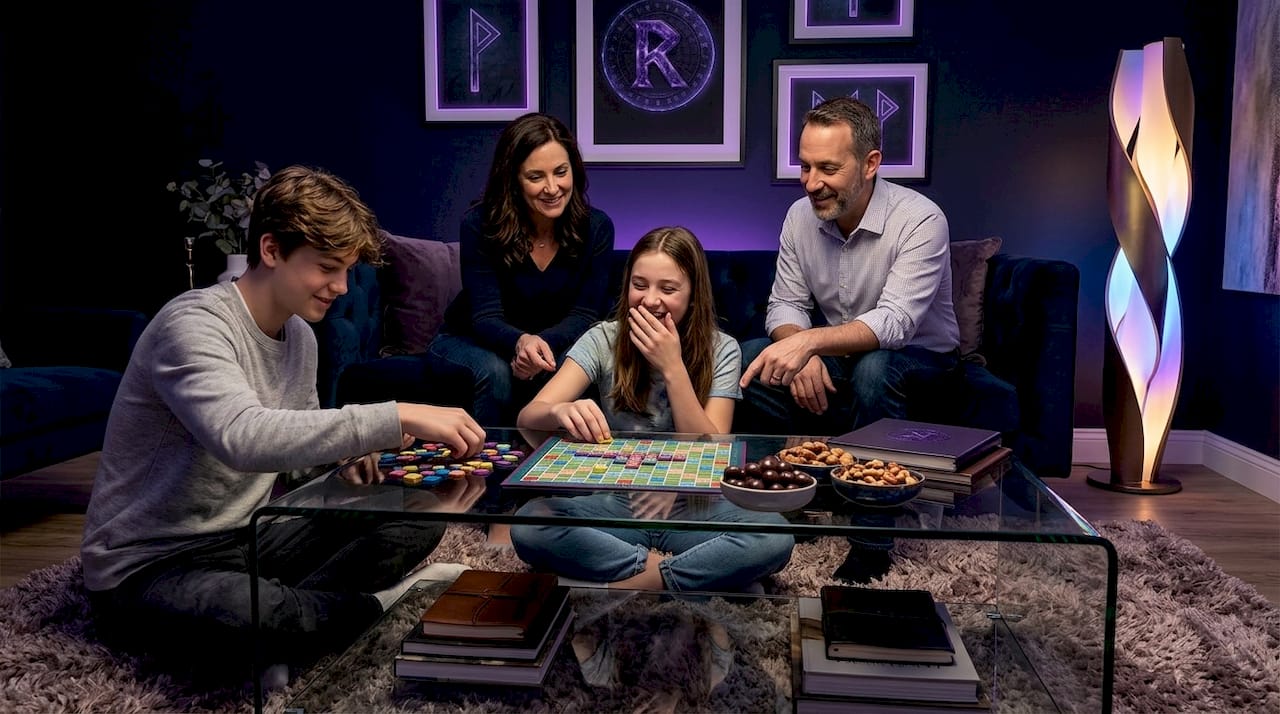
The goal across almost all word puzzles is the same: form valid words, score points, and use your available letters as efficiently as possible. Once that clicks, the specific rules of any game become much easier to absorb.
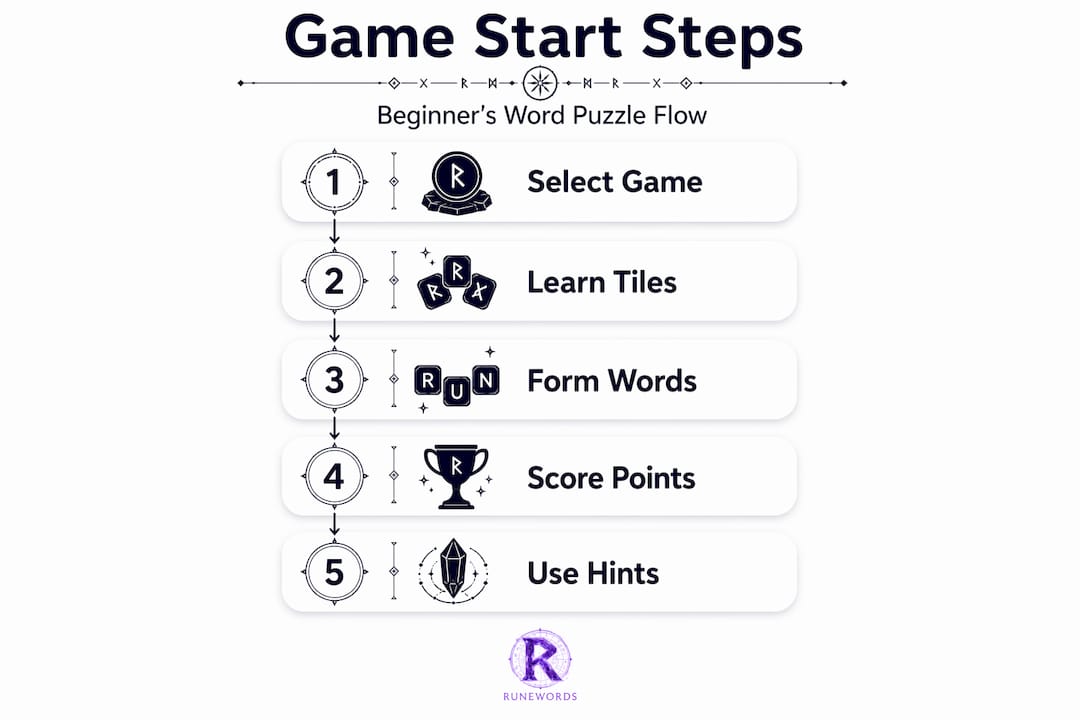
Step-by-step guide to playing your first game
Let's walk through two of the most beginner-friendly formats so you know exactly what to do from the moment you open the app.
Playing a tile board game
- Look at your 7 tiles. Before placing anything, scan what letters you have. Look for common combinations like "TH," "ER," or "ING."
- Find the starting square. Most boards have a center starting point. Your first word must pass through or connect to it.
- Place your word. Lay tiles horizontally or vertically. The longer the word, the more points you score.
- Check for bonus cells. If a tile lands on a double-letter or triple-word square, your score multiplies. The bonus cells and tile values are what separate a good move from a great one.
- Draw new tiles. After each turn, refill your rack to 7 tiles and plan your next word.
- Use jokers wisely. Save them for high-value positions, not just to complete any word.
Playing a daily word guessing game
- Type a 5-letter starting word. This is your first guess and your best source of information.
- Read the color feedback. In Wordle, green means correct letter and position, yellow means the letter exists but is in the wrong spot, and gray means the letter is not in the word at all.
- Adjust your next guess. Keep green letters exactly where they are. Move yellow letters to a different position. Eliminate gray letters entirely.
- Repeat until you solve it. You have 6 attempts total.
Pro Tip: Start with words containing common vowels and consonants like A, E, R, S, and T. A word like "RATES" or "STARE" covers five of the most frequent letters in English and gives you maximum information on your first guess.
Here's a quick reference for reading color feedback:
| Color | Meaning | Your next move |
|---|---|---|
| Green | Correct letter, correct position | Keep it exactly there |
| Yellow | Correct letter, wrong position | Move it to a different spot |
| Gray | Letter not in the word | Remove it from future guesses |
The question mark icon for instructions inside the game is worth tapping before your first attempt. Most beginners skip it and then spend three rounds confused about why yellow tiles keep appearing.
Common mistakes and how to fix them
New players tend to make the same handful of errors. Knowing them ahead of time saves you a lot of frustration.
- Rushing guesses. This is the biggest one. Patience and logical thinking beat speed in every word puzzle format. Spend an extra 30 seconds analyzing what you already know before committing to a move.
- Ignoring color feedback. Many beginners look at the colors but don't actually change their strategy. If a letter is gray, it's gone. Do not guess it again.
- Overusing rare letters. Tiles like Q, Z, and X feel exciting, but they're hard to place and low-frequency in common words. Focus on building with common letters first.
- Forgetting bonus cells. On board games, placing a short word on a triple-word square beats placing a long word on a plain square almost every time.
Pro Tip: When you're completely stuck on a board game, use the shuffle feature to rearrange your tiles visually. Sometimes seeing letters in a different order is all it takes to spot a word you missed.
The biggest shift I see in new players happens when they stop trying to guess and start trying to eliminate. Puzzles reward logic, not luck.
If you hit a wall, use your hints sparingly. Think of each hint as a lifeline. You only get a few, so save them for moments when you've genuinely exhausted your options rather than reaching for them at the first sign of difficulty.
Best word games for new players
Not all games are created equal for beginners. These are the formats and titles worth starting with.
- Daily word guessing games (like Wordle): Short sessions, clear feedback, and words drawn from an established dictionary list mean you're always working with real, recognizable words. One puzzle per day also removes the temptation to binge and burn out.
- Tile board games (like Easy Words): The combination of jokers, hints, and swaps means you're never truly stuck. The 13x13 board gives you room to experiment without feeling boxed in.
- Adaptive difficulty games: Some platforms adjust challenge level to player progress, which means the game grows with you rather than overwhelming you from the start.
- Simple crosswords: Clue-based puzzles build vocabulary and general knowledge simultaneously. Start with themed crosswords on topics you already know well.
When choosing a game, look for these beginner-friendly features:
| Feature | Why it helps beginners |
|---|---|
| In-game hints | Removes the frustration of being completely stuck |
| Adaptive difficulty | Keeps the challenge appropriate as you improve |
| Short session length | Builds habit without overwhelming your schedule |
| Visual feedback | Makes learning from mistakes immediate and clear |
Runewords is worth exploring early in your journey. It combines two play styles in one app: swipe letters on a circular wheel or solve crossword-style from clues. That flexibility means you can switch between styles depending on your mood, which is exactly the kind of low-pressure variety that helps new players find their preferred puzzle style without committing to one format.
My honest take on starting word puzzles
I've watched a lot of beginners approach their first word puzzle game the same way: they dive in, make random guesses, get frustrated when it doesn't work, and quit within ten minutes. And I get it. The instinct is to act fast and figure it out as you go.
What I've learned is that the players who stick with it and actually improve are the ones who slow down early. Not because they're naturally patient, but because they realize the game is giving them information with every single move. That feedback, whether it's a color change or a score update, is the game teaching you how to play better. Ignoring it is like reading a textbook but skipping all the examples.
In my experience, the best thing a new player can do is pick one game and stay with it for at least a week before trying something else. You won't master it in a day, and switching games too early means you never build the pattern recognition that makes puzzles genuinely satisfying. The moment it clicks, when you start seeing word possibilities instead of random letters, is worth the initial discomfort.
I'd also push back on the idea that word puzzles are only for people who are "good with words." The skills you need are logical thinking and a willingness to learn from mistakes. Vocabulary helps, but it's not the whole game.
— Anthony
Try Runewords and put these strategies to work
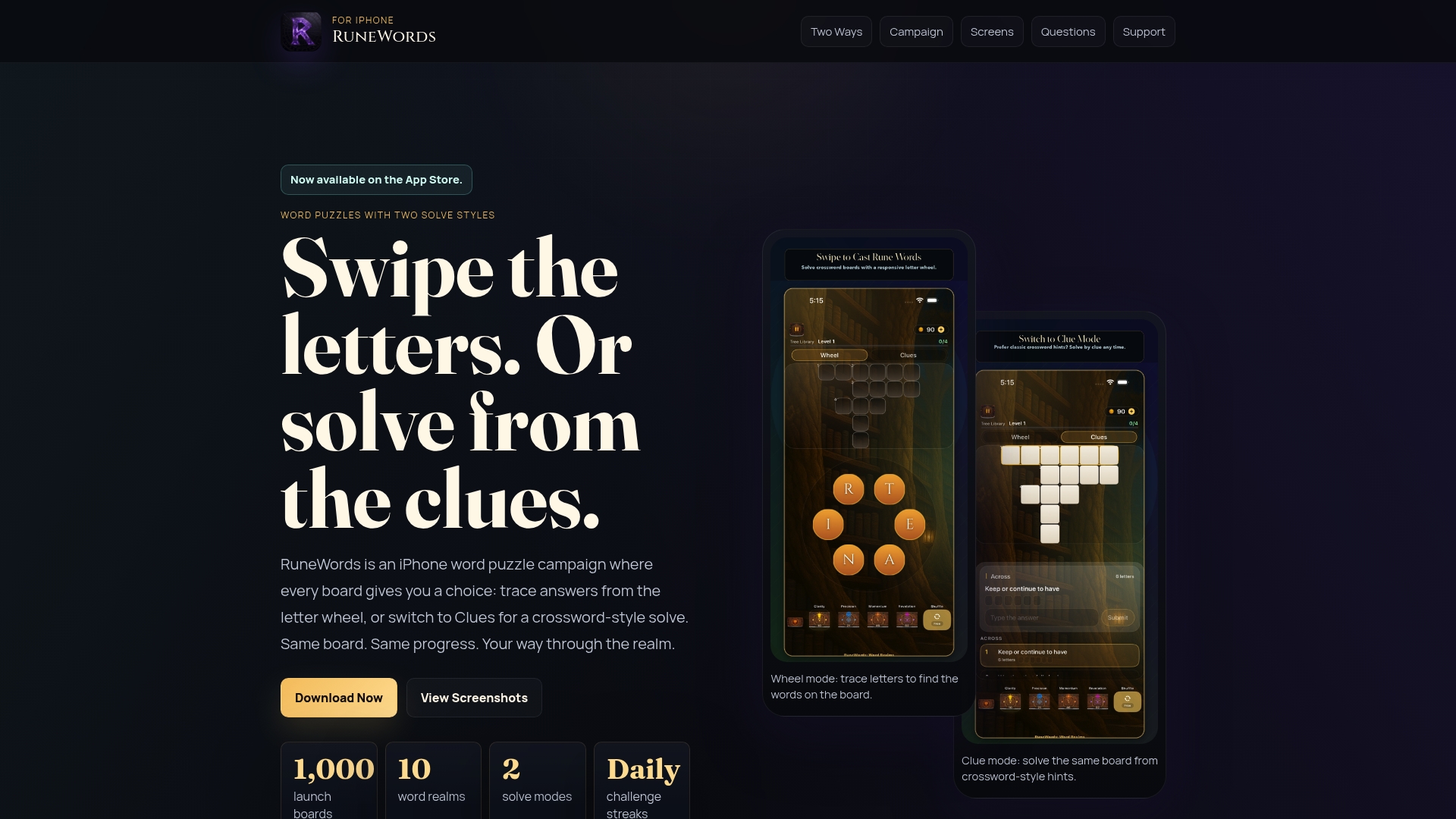
You've got the foundation now. You know the tools, the mechanics, and the mistakes to avoid. The next step is actually playing, and Runewords is one of the best places to start. It's designed for players who want flexibility without complexity. You can swipe letters on a circular wheel for a visual, pattern-based challenge, or work through crossword-style clues if you prefer reasoning from context. With 1,000 launch boards across ten distinct realms and a fresh daily challenge every day, there's always something new to try without the pressure of starting from scratch. Rewards and optional enhancements are built in without interrupting your game. Head to Runewords and start your first puzzle today.
FAQ
What does a beginner need to start a word puzzle game?
You need a basic understanding of letter tiles, game goals, and how scoring works. Most beginner-friendly games include built-in hints and tutorials that walk you through the rules before your first move.
How do you read color feedback in word guessing games?
In games like Wordle, green means the letter is correct and in the right position, yellow means the letter is in the word but in the wrong spot, and gray means the letter is not in the word at all.
What are the best starting words for word guessing puzzles?
Words containing common letters like A, E, R, S, and T give you the most information on your first guess. Examples include "RATES," "STARE," or "AROSE."
How do jokers work in tile board games?
A joker is a wildcard tile that can substitute for any letter you need. Save jokers for high-value board positions rather than using them on your first available word.
How long does it take to get good at word puzzles?
Most beginners notice real improvement after about one week of consistent daily play. Sticking with one game format long enough to recognize patterns is more effective than switching between multiple games too quickly.