

Most people assume word puzzle innovation is about harder vocabulary. If a puzzle stumps you, the thinking goes, the designer must have picked obscure words. That assumption is wrong, and understanding how word puzzle innovation works will change how you approach every puzzle you play. Modern puzzle design is a layered process involving structural architecture, cognitive psychology, and increasingly, algorithmic engineering. This article breaks down each layer with real 2026 examples so you can see the mechanics behind the challenge, not just the challenge itself.
Table of Contents
- Key takeaways
- How word puzzle innovation works through structural design
- Cognitive mechanics behind player psychology
- Algorithmic innovation in puzzle development
- Recent innovative word puzzles from 2026
- Best practices for creating engaging word puzzles
- My take on what really drives puzzle innovation
- Experience word puzzle innovation with Runewords
- FAQ
Key takeaways
| Point | Details |
|---|---|
| Structure beats vocabulary | Puzzle difficulty comes from grid design and letter constraints, not just rare words. |
| Cognitive traps are intentional | Designers exploit linguistic ambiguity and verb-noun confusion to create challenge. |
| Algorithms power fairness | Seeded random number generators make daily puzzles reproducible and equally fair for all players. |
| Emotional design is rising | Puzzles increasingly aim to create specific moods, not just test knowledge. |
| Pattern recognition wins | Recognizing structural patterns improves solving speed more than memorizing word lists. |
How word puzzle innovation works through structural design
The biggest misconception in the word puzzle development process is that difficulty equals obscurity. A puzzle with unusual words is not automatically a good puzzle. What separates a forgettable puzzle from one you think about all day is structural design, specifically the way constraints create a limited solution space that forces your brain to work differently.
The concept of a "structural bottleneck" explains this well. A bottleneck is a design choice that narrows the path to solutions without making them impossible. Consider the NYT Spelling Bee from May 20, 2026: the puzzle used a seven-letter, A-centered hive with 48 valid words, a point ceiling of 229, a Genius threshold of 160, and three pangrams. The letter "A" appeared as the required center letter, which meant every single valid word had to contain it. That one constraint eliminated thousands of common English words from play before you typed a single letter.
Three features define strong structural design in word puzzles:
- Letter placement and frequency. Centering a hive on a vowel like "A" or "E" forces players to think in vowel-heavy patterns, which conflicts with how most people naturally recall words.
- Repeated roots and compound constructions. Compound-heavy puzzle designs push players toward morphological thinking, recognizing prefixes and suffixes rather than whole words.
- Grid symmetry and word fit. Crossword grids are built for symmetry, which means every design choice affects multiple answers simultaneously, creating a web of interdependencies that makes construction and solving equally demanding.
Pro Tip: When you feel stuck on a puzzle, stop thinking about words and start thinking about the structure. Ask yourself what the constraints are, which letters are forced, and what word shapes those constraints allow. Solving the architecture first often unlocks the vocabulary.
Cognitive mechanics behind player psychology
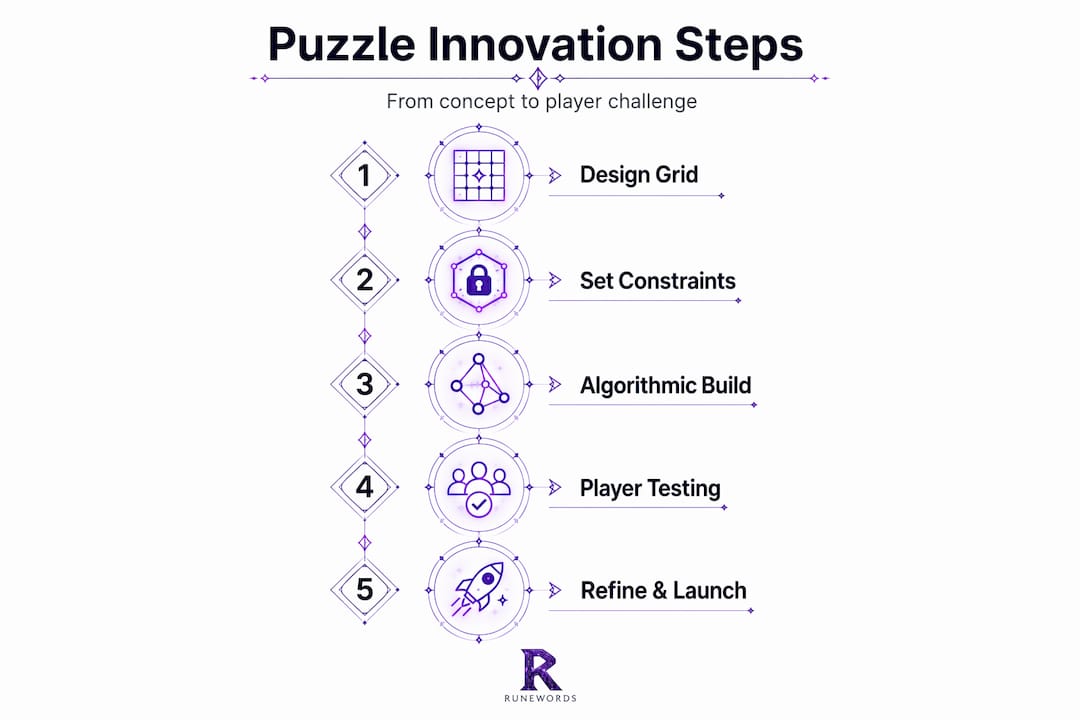
Structural design sets the stage. Player psychology determines whether the puzzle feels satisfying or frustrating, and the best puzzle designers know exactly which cognitive buttons to push.
One of the most powerful techniques is "word collision," a term used by veteran constructors Richard E. Maltby Jr. and Jackson to describe how English language ambiguity gets weaponized against solvers. A clue that reads like it needs a noun actually wants a verb. A phrase that suggests a sports context is actually about cooking. Your brain commits to one interpretation, and the puzzle exploits that commitment.
This works because of a well-documented cognitive bias: once you form an initial interpretation of a word or phrase, your brain filters incoming information to support that interpretation rather than challenge it. Puzzle designers use this against you deliberately. The result is that moment of genuine surprise when the correct answer finally clicks, which is one of the most satisfying experiences in puzzle solving.
"Innovation in word puzzles thrives by challenging player expectations around language and patterns rather than raw vocabulary." — Insight from Maltby Jr. and Jackson's work on cryptic crossword construction
The psychological layer goes deeper than individual clues. Puzzle designers also build what researchers call "success cycles." Educational experts studying puzzle-based learning have found that low-pressure, achievable challenges build persistence and cognitive flexibility more effectively than vocabulary memorization alone. A well-designed puzzle gives you a few easy wins early, which builds confidence, which keeps you engaged long enough to wrestle with the harder parts.
The cognitive experience of solving a puzzle includes:
- Commitment bias. Your first interpretation of a clue anchors your thinking, making it harder to consider alternatives.
- Pattern completion drive. Once you find a few words, your brain becomes motivated to complete the set, even when the remaining words are harder.
- Linguistic ambiguity exploitation. Designers trigger verb-noun misinterpretation deliberately to create challenge that feels fair in hindsight.
Pro Tip: When a clue or letter set feels impossible, deliberately try the opposite interpretation. If you've been thinking nouns, try verbs. If you've been thinking abstract, try concrete objects. Reversing your assumption is often the fastest way to break a cognitive lock.
Algorithmic innovation in puzzle development
Behind every daily puzzle you play is a layer of technology most players never think about. The word puzzle development process has been transformed by software tools that handle what used to require hours of manual construction work.
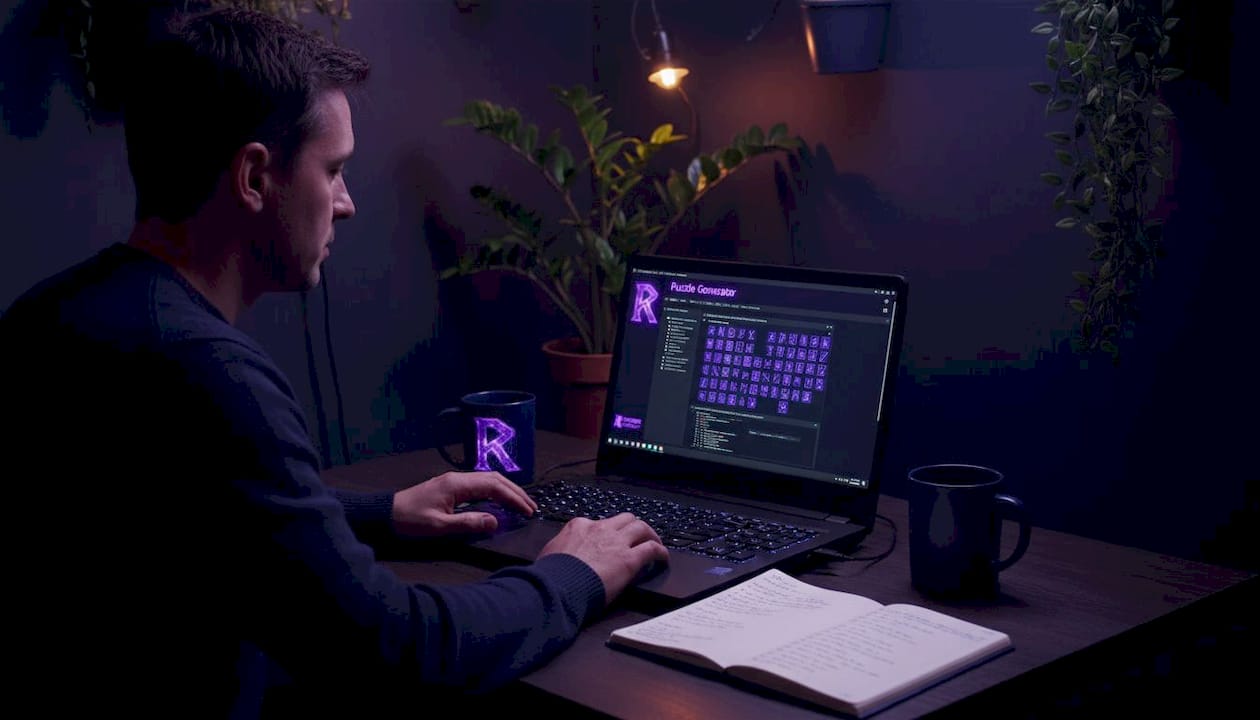
The most significant technical advancement is the use of seeded pseudo-random number generators, or PRNGs. Deterministic puzzle generation using date-based seeds means that a puzzle generated for a specific date will always produce the same result, no matter when or where it is generated. This is what makes daily puzzles shareable. When you post your score, every person who played that day solved exactly the same puzzle under exactly the same conditions.
Here is how traditional and algorithmic puzzle creation compare:
| Feature | Traditional creation | Algorithmic generation |
|---|---|---|
| Time to build one puzzle | Hours to days | Seconds to minutes |
| Reproducibility | Manual verification required | Guaranteed by seed logic |
| Difficulty calibration | Editor judgment | Measurable scoring metrics |
| Scalability | Limited by human capacity | Thousands of puzzles at once |
| Shareability | Requires identical distribution | Built into the generation logic |
The software does not replace human creativity. What it does is free constructors to focus on the design decisions that matter, which letters to constrain, which themes to pursue, which cognitive traps to set, rather than the mechanical work of checking word validity and grid fit.
Pro Tip: If you play a daily puzzle and want to understand why it felt harder or easier than usual, look at the structural choices: the center letter, the number of pangrams, and the point ceiling. Those numbers tell you exactly how the designer calibrated the difficulty.
Recent innovative word puzzles from 2026
The best way to understand how word puzzles evolve is to look at specific examples from this year. Two puzzles stand out for what they reveal about current trends in word puzzle design.
The May 20, 2026 NYT Spelling Bee is a textbook case in structural innovation. Three pangrams in a single puzzle is unusual. A pangram requires using all seven letters, which means the designer found three distinct words or phrases that each used the full letter set. That level of morphological density signals that the puzzle was built around compound constructions and root word flexibility rather than standalone vocabulary. Players who approached it as a vocabulary test struggled. Players who thought in word families, recognizing how prefixes and suffixes could combine with the available letters, moved through it much faster.
The NYT Strands puzzle #808 from May 2026 illustrates a different kind of innovation: emotional design. The puzzle's 12-letter spangram was "TAKEYOURTIME," which functioned as a direct emotional nudge to the player, encouraging a slower, more deliberate solving pace. That is not a vocabulary choice. It is a psychological design choice. The constructor used the meta-structure of the puzzle to communicate a mood.
Key lessons from these 2026 examples:
- Multiple pangrams signal morphological fluency is the target skill, not word recall.
- Spangrams can carry emotional intent, shaping how you feel while solving.
- Structural choices like center letter and point ceiling reveal the designer's difficulty target before you solve a single word.
- Puzzle creators draw inspiration from current language, including podcasts, conversations, and media, which keeps word selection culturally fresh.
Best practices for creating engaging word puzzles
Understanding the word puzzle development process also helps you appreciate what separates good puzzle design from great puzzle design. Whether you want to create your own puzzles or simply get more out of the ones you play, these principles matter.
- Balance accessibility with depth. A puzzle that only experts can finish loses casual players. A puzzle with no challenge bores everyone. The best designs offer early wins that build toward harder discoveries.
- Test with real players, not just word lists. Algorithmic tools can verify word validity, but only human testers reveal where cognitive traps feel unfair versus satisfying.
- Build emotional intent into the structure. Decide what you want the player to feel, whether that is focused, playful, or triumphant, and let that goal drive your structural choices.
- Follow language as it evolves. Auditory inspiration from current media keeps clues and answers culturally relevant, which makes puzzles feel alive rather than dated.
- Use adaptive difficulty where possible. Emerging trends in word puzzle design point toward personalized experiences where the puzzle adjusts to player behavior, a direction AI is making increasingly practical.
My take on what really drives puzzle innovation
I've spent years watching how the conversation around word puzzles shifts, and the pattern I keep seeing is this: players who focus on vocabulary improvement plateau. Players who focus on pattern recognition keep getting better, and they enjoy the process more.
The vocabulary-first mindset treats puzzles as tests. The pattern-first mindset treats them as systems to decode. When you see a puzzle as a system, you start noticing the designer's fingerprints. You recognize structural bottlenecks before they trap you. You catch yourself falling into a cognitive bias and course-correct. That shift in perspective is what separates casual solvers from genuinely skilled ones.
What I find most interesting about where puzzle design is heading is the emotional layer. The "TAKEYOURTIME" spangram is not a gimmick. It signals that designers are thinking about the whole experience, not just the challenge. The best puzzles I've encountered recently do not just test you. They put you in a specific mental state and then test you from there. That is a much harder thing to design, and it is where I think the next decade of innovation will live.
My recommendation: pay attention to how a puzzle makes you feel before you solve it, not just after. That emotional setup is intentional, and understanding it will make you a sharper solver.
— Anthony
Experience word puzzle innovation with Runewords
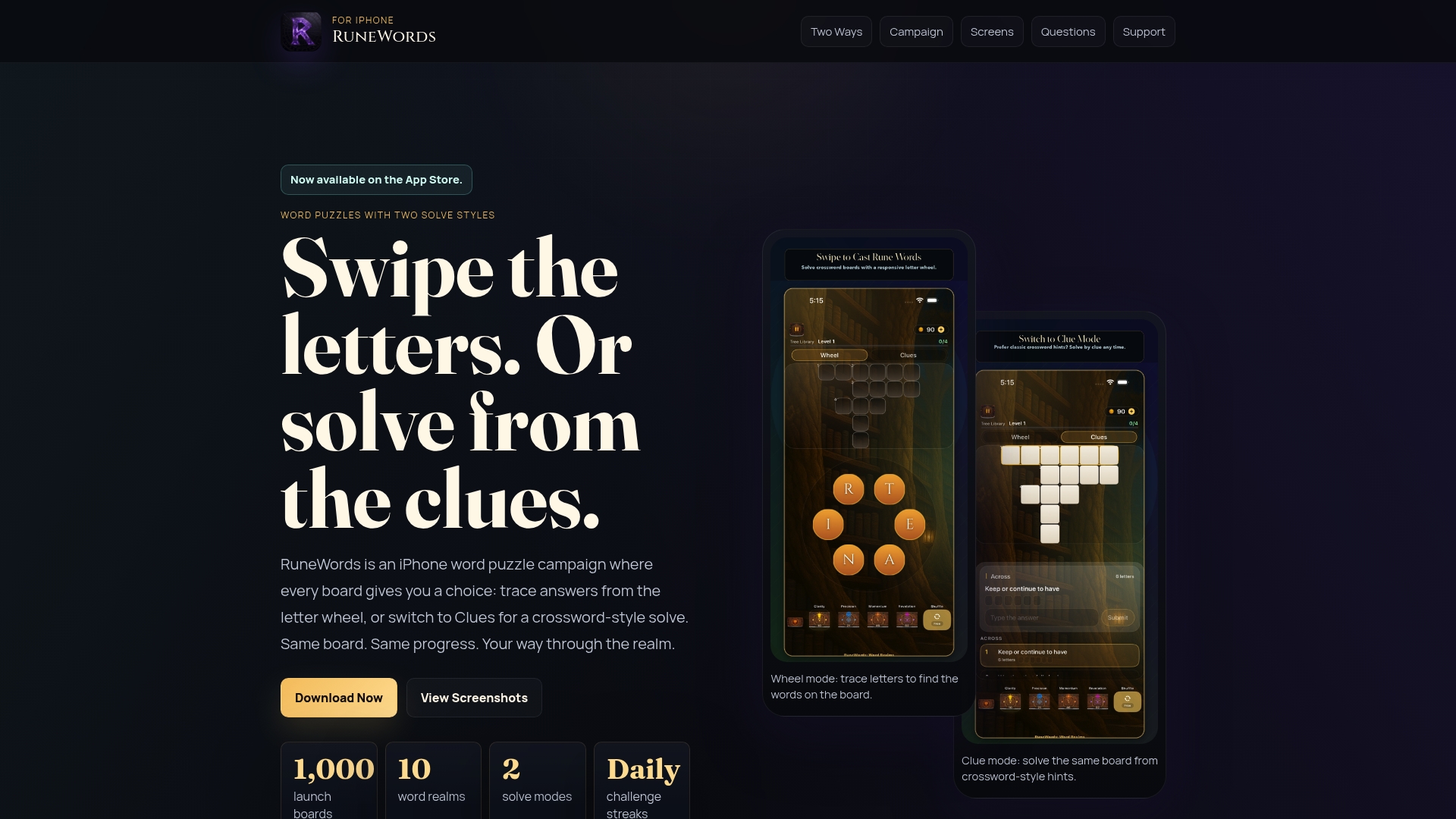
If you want to experience the structural and cognitive principles covered in this article firsthand, Runewords is worth your time. The app combines two distinct solving methods into one puzzle: you can swipe letters on a circular wheel using visual pattern recognition, or work through crossword-style clues using logical reasoning. That dual approach is not a novelty. It directly engages the two cognitive systems this article describes, pattern-based thinking and clue-based deduction, within a single puzzle session.
With 1,000 launch boards across ten distinct realms and a fresh daily challenge, Runewords gives you the structural variety and daily consistency that serious puzzle enthusiasts need. Try Runewords and see how thoughtful puzzle architecture changes your solving experience.
FAQ
What is a structural bottleneck in word puzzle design?
A structural bottleneck is a design constraint that narrows the valid solution space without making the puzzle unsolvable. The May 20, 2026 NYT Spelling Bee used a required center letter "A" to eliminate thousands of common words, forcing players to think in specific letter patterns.
How do seeded random number generators affect daily puzzles?
Seeded PRNGs use a date-based input to generate the same puzzle output every time, making daily puzzles reproducible and fair for all players. This is what allows players to share scores knowing they all solved identical puzzles.
What is the "word collision" technique in puzzle design?
Word collision is a construction method where designers exploit English language ambiguity to make solvers commit to the wrong interpretation of a clue or letter set. Veterans like Maltby Jr. and Jackson use it deliberately to create challenge that feels satisfying rather than arbitrary when solved.
How do innovative word games use emotional design?
Emotional design in word puzzles means using structural elements to create a specific mood or mental state during solving. The NYT Strands puzzle #808 used a 12-letter spangram spelling "TAKEYOURTIME" to encourage a slower, more deliberate solving pace.
What skills improve fastest from solving word puzzles regularly?
Pattern recognition and cognitive flexibility improve faster than raw vocabulary from regular puzzle solving. Research on success cycles shows that consistent exposure to structured challenges builds persistence and lateral thinking more effectively than word memorization alone.